







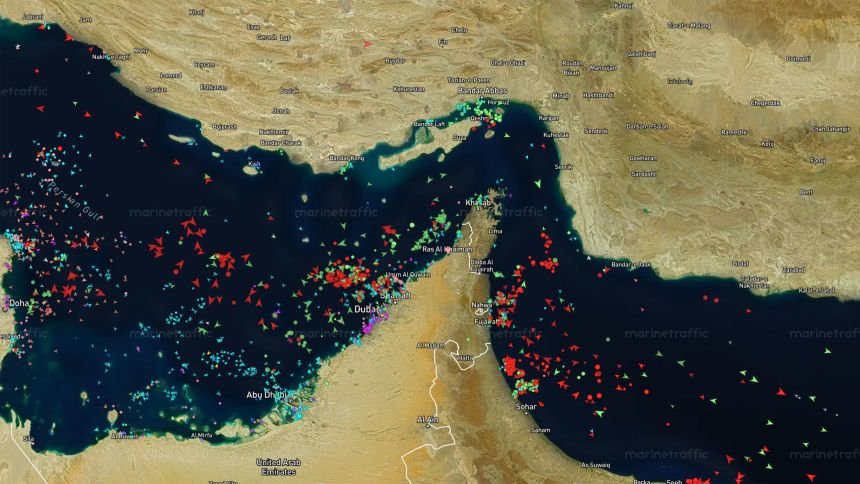
Commercial vessels have begun safely transiting the Strait of Hormuz under a newly launched United Nations emergency evacuation scheme, offering a major boost to global trade and energy markets after months of disruption in one of the world’s most critical shipping corridors. The operation follows intensive regional diplomacy and the recent U.S.-Iran ceasefire framework aimed at reducing tensions across the Gulf.
The UN’s International Maritime Organization (IMO) confirmed that ships have started moving through the strategic waterway under a coordinated evacuation plan designed to assist hundreds of vessels stranded during the crisis. The operation is expected to facilitate the movement of more than 11,000 seafarers and gradually clear a backlog of ships trapped in Gulf waters.
As part of the effort, Oman opened temporary toll-free shipping routes in coordination with the IMO and regional partners. The temporary northern and southern corridors were established to help vessels avoid high-risk areas while maintaining safe navigation through the Strait. Omani authorities stressed that no transit fees would be charged under the emergency arrangement.
Despite the breakthrough, maritime officials caution that conditions remain fragile. Navigation is still being closely supervised due to lingering risks, including sea mines, congested routes, and elevated insurance costs. Shipping traffic has increased in recent days but remains well below pre-crisis levels.
The Strait of Hormuz is one of the world’s most important energy chokepoints, handling roughly a fifth of global oil and liquefied natural gas shipments. Analysts say the reopening of shipping lanes could help stabilize energy prices and reduce pressure on global supply chains if the security situation continues to improve.