










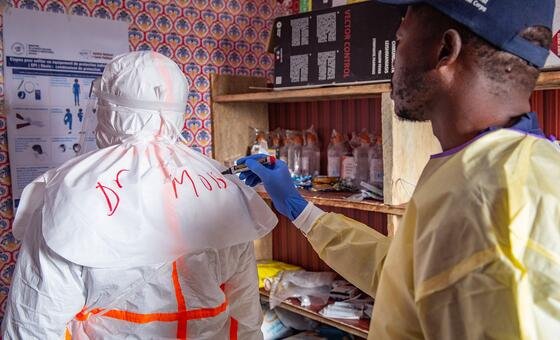
The Democratic Republic of Congo has begun vaccinating frontline healthcare workers as authorities battle the country’s largest Ebola outbreak on record. The campaign began in Bunia, the epicentre of the outbreak, on September 19, with health workers and other people directly involved in the response receiving the Ervebo vaccine.
But there is an unusual problem at the centre of the Ebola vaccination in Congo campaign. The vaccine being used was developed for the Zaire strain of Ebola, while the current outbreak is being caused by the less common Bundibugyo virus. There is currently no licensed vaccine or specific treatment for Bundibugyo virus disease.
Why Congo Is Using a Vaccine That Was Not Designed for This Strain
Ervebo has been highly useful in previous outbreaks involving the Zaire strain, but scientists do not yet know whether it can protect people against Bundibugyo Ebola.
WHO has recommended that Ervebo be used against Bundibugyo virus only within a research protocol because there is not enough evidence to confirm its effectiveness. The current programme therefore has two purposes: protecting people who face a high risk of exposure and collecting evidence that could help determine whether the vaccine provides cross-protection.
Around 70,000 doses have been made available, with about 50,000 intended for frontline workers and 20,000 for a clinical trial. More than 3,000 frontline workers had already received the vaccine by September 16.
Congo’s Outbreak Has Become a Race Against Spread
The scale of the outbreak explains why health authorities are moving while research continues.
As of September 7, WHO reported 6,757 confirmed cases and 3,267 deaths in Congo. The outbreak had reached 61 health zones across six provinces, with Ituri remaining the main epicentre.
More recent reporting put the confirmed total above 7,500 cases and more than 3,600 deaths, making the outbreak the largest Ebola outbreak recorded in Congo.
The response is also complicated by insecurity, population displacement and difficult access to healthcare. These conditions make contact tracing, early diagnosis and treatment harder, giving the virus more opportunities to spread.
What Happens If Ervebo Works?
The answer could change the response to Bundibugyo Ebola in Congo. If research shows that Ervebo offers meaningful protection, an existing vaccine could become an important tool against a strain for which no approved vaccine currently exists.
Researchers are also studying other candidates specifically aimed at Bundibugyo virus, including vaccines being developed by Moderna and the University of Oxford.
For now, Congo’s strategy is a mixture of immediate protection and scientific investigation. Health workers are being protected with the best available option while researchers try to determine whether that option can actually stop the strain driving the current outbreak.

One thought on “Congo Begins Ebola Vaccination as Bundibugyo Outbreak Tests Limits of Existing Ebola Vaccine”