







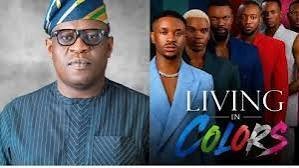
The planned Living in Colors premiere in Lagos has been stopped by the National Film and Video Censors Board (NFVCB), but the controversy goes beyond the movie itself. The case has raised fresh questions about NFVCB movie censorship, how filmmakers handle classification rules and what happens when a production reaches the public before regulators approve it.
The NFVCB says the film was never submitted for vetting or classification. It also says its trailer contains what it describes as explicit sexual content and material promoting same-sex relationships.
Why NFVCB Stopped the Premiere
The Living in Colors premiere was scheduled to take place at a cinema facility in Lagos. However, the NFVCB said public exhibition or promotion of an unclassified film is illegal under Nigeria’s film regulations.
The board has contacted the proposed venue and warned that cinemas or exhibition centres that host the film could face serious sanctions, including closure and the loss of their operating licences. It has also said legal proceedings are being initiated against the production company, producers and promoters.
This means the dispute is not simply about whether audiences will see the movie. The filmmakers could now face a wider regulatory battle over how the production was made, promoted and prepared for release.
The Bigger Issue: Nigeria’s Film Censorship Rules
The NFVCB Living in Colors dispute also highlights an important part of Nigeria’s entertainment industry that audiences rarely see: films need regulatory approval before public exhibition or distribution.
Premium Times reported that the NFVCB classified 304 films between January and April 2026, showing that classification remains an active part of the Nigerian film industry. The board has also maintained that digital releases, including films released on YouTube, fall within its regulatory framework.
That could become especially important because Living in Colors was reportedly scheduled for a YouTube release on August 30.
What Happens Next?
The biggest question is whether the production team will challenge the NFVCB’s position, modify the film, delay its release or attempt to distribute it through another platform.
For now, the Living in Colors ban shows that Nigerian filmmakers cannot simply rely on online distribution to avoid theatrical regulations. The NFVCB has made clear that it intends to pursue both the people behind the production and platforms that facilitate its exhibition.
The dispute could therefore become an important test of how Nigeria’s film censorship laws are enforced as Nollywood increasingly moves between cinemas, YouTube and other digital platforms.