









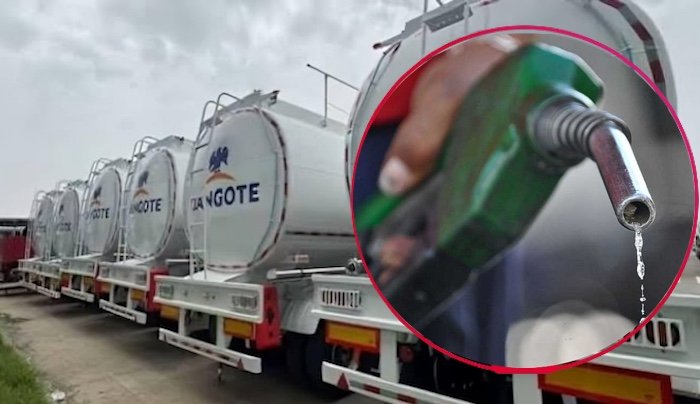
The Dangote Refinery petrol supply to Nigeria’s domestic market fell sharply in July, while petrol imports increased, highlighting the delicate balance between local refining and foreign fuel supplies.
New data from the Nigerian Midstream and Downstream Petroleum Regulatory Authority (NMDPRA) showed that domestic petrol receipts dropped from 32.5 million litres per day in June to 25.8 million litres in July, a decline of about 21 per cent. At the same time, Nigeria petrol imports in July 2026 rose by 9 per cent, from 18.1 million litres to 19.7 million litres per day.
Imports Are Rising, but Nigeria is Not Back Where It Was
The July figures may look like a setback for Dangote Refinery fuel supply, but the longer-term numbers tell a different story.
Domestic refinery supply was 25.8 million litres per day in July 2026, compared with just 16.5 million litres per day in July 2025. Meanwhile, petrol imports fell from 36.1 million litres per day a year earlier to 19.7 million litres.
So, although imports increased between June and July, Nigeria is still importing significantly less petrol than it was before domestic refining expanded. The bigger issue is consistency. The July figures show that the country’s growing refining capacity has not completely removed the need for imported fuel.
Why Did Petrol Supply Fall?
The NMDPRA July 2026 data shows that total daily petrol receipts fell from 50.6 million litres in June to 45.5 million litres in July, a 10 per cent decline.
The Dangote Refinery operated at an average 71.09 per cent capacity utilisation during the month. It produced 25.9 million litres of petrol daily and supplied almost all of it to the domestic market, while also exporting 3.4 million litres per day.
The refinery also stopped taking gasoline blendstock and intermediates in July after receiving 48.27 million litres in June. That change is part of the shifting supply picture that will be worth watching in the coming months.
Nigerians Used Less Petrol Too
One reason the lower supply did not immediately translate into a major shortage is that petrol consumption in Nigeria also fell. Daily consumption dropped 25 per cent in July to 35.7 million litres from 47.4 million litres in June. Petrol stock sufficiency also improved from 19.7 days to 22.4 days.
That means Nigeria had a larger supply buffer even though less petrol entered the market. The development could therefore be more about changing demand and supply patterns than an immediate fuel crisis.
What to Watch Next
The key question for petrol supply in Nigeria is whether July was a temporary dip or the beginning of a longer trend.
Dangote’s growing role has already transformed Nigeria’s fuel trade. The US Energy Information Administration says Nigeria’s seaborne petroleum product exports have increased sharply since the refinery began operations.
For consumers, however, the real test is whether local refining can provide a stable supply while keeping Nigeria’s reliance on imported petrol low.