









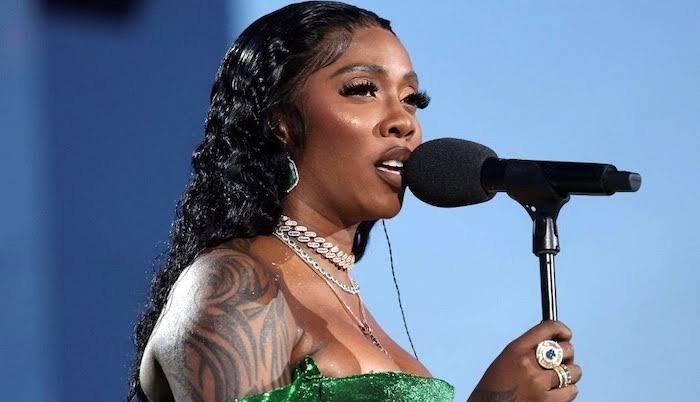
Tiwa Savage and female artists collaborations have become a fresh talking point after the Afrobeats star explained why working with other women does not always produce the commercial results people expect.
Savage argued that putting two female artists on the same song is not enough. According to her, some collaborations struggle because the artists do not put enough promotional effort behind the releases, which can eventually affect streams and visibility.
Her comments have opened a wider conversation about why female collaborations in Nigerian music do not always receive the same commercial push as major male-led records.
Tiwa Savage Says Promotion Matters
The central point in the Tiwa Savage collaborations debate is simple: a strong song still needs a strong campaign.
Savage pointed to her collaboration with Odumodublvck on 100 Million as an example of a record that benefited from visibility and audience interest. The song was released in March 2024 and is officially credited to Odumodublvck featuring Tiwa Savage.
She also highlighted her willingness to work with other leading women, including Yemi Alade and Ayra Starr, despite the online comparisons and rivalry that sometimes surround female artists.
Her point challenges the idea that women simply need to collaborate more. If a collaboration is released without enough marketing, playlist support, performances and social media promotion, the song may struggle regardless of how talented the artists are.
Tiwa Savage and Yemi Alade Show Another Possibility
The Tiwa Savage and Yemi Alade relationship is particularly interesting because both artists are established stars with international audiences.
Savage has also worked with Ayra Starr, including the soundtrack for Water & Garri. Female collaborations such as these show that established and younger artists can share audiences rather than compete for the same space.
That matters in an industry where women have historically had to fight for limited attention. The question now is whether more female artists can turn collaborations into genuine commercial partnerships instead of one-off moments.
The Bigger Problem May Be The Business Behind The Music
The debate around female artists in Nigerian music often focuses on unity, but Savage’s comments introduce another factor: incentives.
Male artists frequently appear together across different genres and fan bases, creating opportunities for each artist to reach new listeners. Female artists can do the same, but the collaboration needs a strategy behind it.
That means labels, managers and artists may need to think beyond recording the song. A proper release campaign, joint performances, interviews, social media content and consistent promotion can determine whether a collaboration becomes a hit or disappears after release.
Savage’s position is therefore less about saying women should simply “support each other” and more about asking whether the industry is prepared to invest in female collaborations. That could be the more important conversation coming out of her comments.